
The Artistic Interior
The Fall of the House of UsherRoderick’s paintings, music, and improvised verse reveal an imagination that gives form to his mental distress without relieving it.
increasing Bearing strength in each event
 decreasing
Bearing strength in each eventdecreasingArt Among the Furnishings
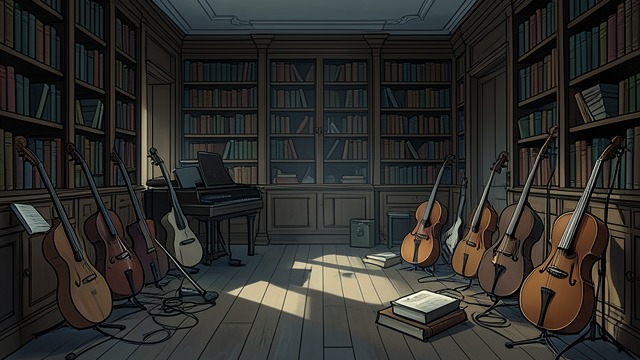
A Mind Surrounded by Art
Instruments and books
Musical instruments, books, and other objects fill the chamber but do not enliven it. The setting presents culture as part of Roderick’s daily life, yet cannot counter the room’s pervasive gloom.
A restricted comfort
Roderick’s sensory illness limits what he can bear. Art remains available as a narrow outlet, not a reliable cure for his distress.
The Abstract Paintings

Images Without Objects
A distilled imagination
Roderick’s paintings rely on stark simplicity and abstraction. Their effect is intense precisely because they do not offer the reassuring concreteness of ordinary scenes.
Distress made visible
The narrator feels awe before these images but cannot fully explain why. The paintings translate Roderick’s internal condition into forms that unsettle the observer as well.
The Endless Vault

A Sealed Interior
A painted tunnel
One image depicts a long, smooth vault deep beneath the earth, with no visible exit or artificial light. Its intense illumination seems incompatible with its buried setting.
A prefiguration
The image resembles confinement without directly depicting the family vault. Its enclosed depth gives visual form to the fears of entombment that later become literal.
The Guitar and the Dirges
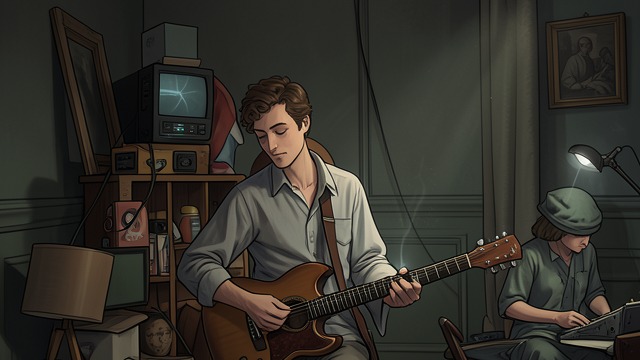
Music as Solace
Narrow soundscape
Roderick tolerates certain sounds from stringed instruments despite his acute sensitivity. He improvises on the guitar, creating music that the narrator remembers as mournful and strange.
No lasting relief
The music gives Roderick a concentrated form of expression but does not restore calm. Its intensity exposes how limited any artistic consolation remains.
The Ballad of Ruin
A Palace in Decline
Verse and mind
Roderick sings The Haunted Palace, which tells of a radiant dwelling overwhelmed by evil and discord. The narrator hears in it an awareness of Roderick’s failing reason.
An image of collapse
The poem’s ruined palace echoes both the mind and the mansion. Art becomes an indirect prophecy, making the coming catastrophe legible before it occurs.
The narrator’s first hours in Roderick’s chamber
During the narrator’s first days at the mansion
During a conversation about Roderick’s paintings
During the days after Madeline’s first appearance
Before Madeline’s temporary entombment
